Between Worlds and Loving It: The Artists Who Refuse to Pick Just One Culture
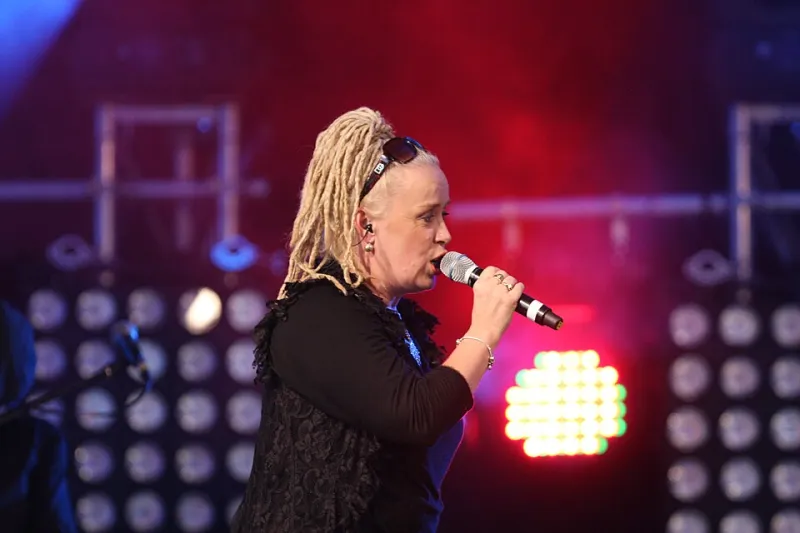
Photo: Eva Rinaldi, CC BY-SA 2.0, via Wikimedia Commons
No Single Lane Required
There's an old gatekeeping question that artists from multicultural backgrounds know intimately: Which one are you? Are you a hip-hop artist or a classical musician? Are you making music for your diaspora or for the mainstream? Are you representing your culture or are you crossing over?
The implicit message has always been: pick one. Audiences need to know where to file you. Labels need to know how to market you. Critics need a box to put you in.
But a growing number of creators are responding to that question with a simple, quiet refusal. And in refusing, they're building something that the gatekeepers didn't see coming.
The Code-Switch as Creative Superpower
Cultural code-switching — the ability to move fluidly between different cultural contexts, languages, aesthetics, and expectations — has long been a survival skill for people who live between worlds. Children of immigrants know it. First-generation Americans know it. Anyone who grew up straddling two different communities knows the mental gymnastics involved in being fully yourself in multiple rooms at once.
What's changed is that a generation of artists has stopped seeing that skill as something to manage and started treating it as a creative foundation.
Take Rina Sawayama, the British-Japanese pop star who's built a career that draws simultaneously from J-pop, early 2000s American R&B, heavy metal, and hyperpop — sometimes within the same song. Her work doesn't ask you to choose which version of her you prefer. It presents all of them at once, daring you to keep up. The result is a fan base that spans continents, genres, and demographics in a way that a more neatly categorized artist simply couldn't achieve.
Or consider Bad Bunny, whose global dominance is inseparable from his refusal to sand down his Puerto Rican identity for American mainstream consumption. He didn't cross over by becoming more palatable. He crossed over by becoming more himself — and in doing so, he pulled the mainstream toward him instead.
Blending Traditions Without Erasing Them
There's an important distinction worth making here. Cultural blending done thoughtfully is different from cultural borrowing done carelessly. The artists who are doing this most powerfully aren't erasing where they come from — they're centering it while expanding outward.
Young Miko, the Puerto Rican reggaeton artist who's become one of the most exciting voices in Latin music, brings her queer identity and island roots into every project without treating either as a footnote. Nigerian-British artist Arlo Parks weaves West African storytelling traditions into indie folk structures so seamlessly that the seams disappear. Japanese American visual artist Sputniko! creates work that mashes up kawaii aesthetics with feminist technology critique and gallery-world conceptualism.
In each case, the multiple cultural threads aren't in tension — they're in conversation. And that conversation is the art.
What This Means for Mainstream Entertainment
For a long time, the mainstream entertainment industry operated on a fairly rigid assumption: niche audiences could have culturally specific content, and everyone else got the default (which usually meant white, English-speaking, and broadly Western). Crossover success meant leaving your specificity at the door.
That model is visibly breaking down. Streaming platforms have demonstrated that audiences will follow compelling work across language and cultural barriers — Squid Game, Money Heist, Lupin, Parasite — these aren't flukes. They're evidence that the appetite for stories rooted in specific cultural contexts is genuinely global.
And for multicultural artists in the US, this creates an opening that didn't exist before. The pressure to flatten your identity for mainstream appeal is loosening, slowly but noticeably. Labels, studios, and platforms are beginning to understand — sometimes reluctantly — that cultural specificity isn't a liability. It's a differentiator.
The Challenges That Don't Go Away
None of this means the road is easy. Artists who occupy multiple cultural spaces often find themselves fielding criticism from every direction simultaneously. Too mainstream for the purists. Too niche for the mainstream. Not authentic enough for one community. Too foreign for another.
The internet has amplified this dynamic in complicated ways. On one hand, it's given multicultural artists direct access to global audiences without needing a major label to vouch for them. On the other, it's also given everyone with a keyboard a platform to question whether you're doing your culture "right."
Navigating that requires a kind of groundedness that goes beyond artistic skill. It requires knowing, deeply and clearly, why you're making the work you're making — and being willing to hold that answer steady when the criticism comes from people who love you and people who don't.
Building Bridges Is the Point
What's striking about the most compelling artists working in this space is that the bridge-building isn't incidental to their work — it is the work. They're not trying to appeal to multiple audiences despite their cultural complexity. They're creating because of it.
There's something worth sitting with in that. In a cultural moment that often feels defined by division, by hardening identity lines and shrinking circles of belonging, artists who build across those lines are doing something genuinely countercultural. They're modeling a different kind of possibility.
At Han Yan Universe, we're particularly attuned to this — the idea that culture doesn't have to be a wall you stand behind, but a universe you keep expanding. The artists who are living that out right now aren't just making great work. They're quietly showing us what it looks like to belong everywhere and nowhere at once — and to make that feel like freedom.