Same You, New Frequency: How Smart Creators Keep Shifting Without Losing Themselves
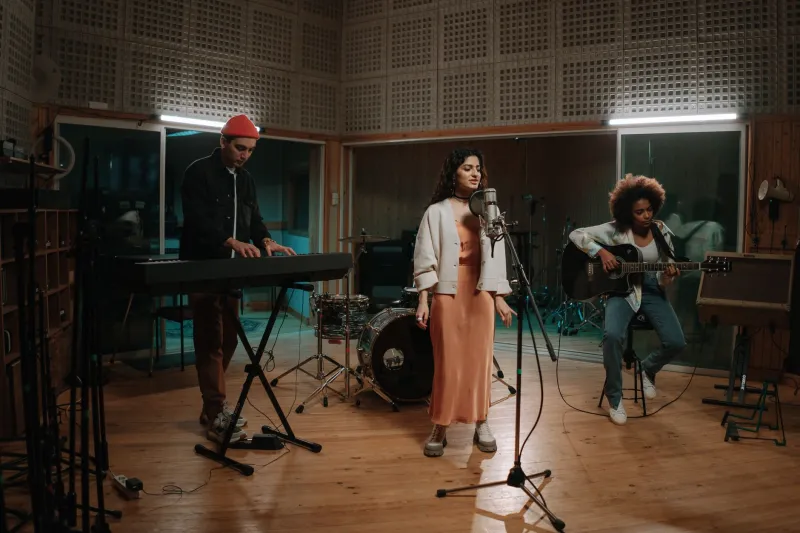
There's a moment every creator dreads. You've built something real — a fanbase, a visual language, a sound that people associate with you — and suddenly you feel the pull to do something completely different. Maybe you've grown. Maybe you're bored. Maybe the world shifted and your old approach doesn't fit the person you are anymore.
The question isn't whether to evolve. That's basically non-negotiable if you want a career that lasts longer than a single trending moment. The real question is how — how do you stretch without snapping? How do you show up new without showing up as a stranger?
Some creators figure it out. A lot don't. The ones who do tend to follow patterns worth paying attention to.
The Myth of the Clean Reinvention
Pop culture loves a reinvention story. We talk about artists "changing everything" and "starting over," but if you look closely, almost none of the big pivots are actually that clean. Beyoncé didn't abandon her voice when she moved from Dangerously in Love to Lemonade — she deepened it. Tyler, the Creator didn't throw away his personality when he shifted from Goblin to Flower Boy — he excavated it.
The creators who stay relevant don't erase themselves. They layer. They add dimensions to a character — their creative persona — that already exists. That's a fundamentally different move than blowing everything up and starting from scratch.
Starting from scratch is actually the riskier play. It signals to your audience that everything you built together was temporary, provisional, maybe even a little fake. Layering, on the other hand, says: I'm still here, and there's more to find.
The Core Identity Question
Before you can evolve strategically, you have to know what you're not willing to change. That sounds simple, but most creators skip this step — and then wonder why their audience feels confused or betrayed when something shifts.
Ask yourself: What do people actually come to me for? Not the surface stuff — not the specific color palette or the particular beat style — but the feeling. The emotional frequency. The worldview.
Maybe people come to you because you make them feel seen. Maybe it's because you make complexity feel accessible. Maybe it's your humor, your honesty, your ability to find beauty in overlooked places. Whatever that core thing is, that's the anchor. Everything else — the aesthetics, the format, the platform, the references — those are variables. Swap them out as needed. But protect the anchor.
Creators who lose their audiences usually didn't change too much. They changed the wrong things. They kept the surface and abandoned the substance, or they overhauled everything at once and gave no one a reason to follow along.
Moving in Signals, Not Announcements
Here's something the most graceful evolutions have in common: they don't make a big deal out of themselves. The creator doesn't post a ten-minute video explaining that they're "going in a new direction." They just... start going there. Slowly. With intention.
Think of it as sending signals before you send the full message. You introduce a new visual element here, a slightly different tone there. You let your audience get comfortable with the new frequency before you turn the volume all the way up. By the time you've fully arrived somewhere new, your most loyal followers have been on the journey with you — they don't feel dropped into a foreign country, they feel like they helped you build it.
This is especially true for creators with tight-knit communities. Your core fans are paying attention. They notice the small shifts. If you trust them with the process — even implicitly, just by letting it happen in public — they become invested in where you end up.
When the Tension Is the Point
Some of the most interesting creative voices right now are ones that hold two things in tension simultaneously. They're nostalgic and forward-looking. They're deeply personal and weirdly universal. They're rooted in one tradition while clearly influenced by ten others.
That tension isn't a problem to solve. It's often the whole appeal.
Creators who try to resolve every contradiction in their work — who want to be perfectly coherent, perfectly consistent, perfectly brand-safe — often sand down exactly the stuff that made people pay attention in the first place. The rough edges, the contradictions, the moments where the mask slips: that's where the real connection lives.
Evolving your voice doesn't mean ironing everything out. It might mean leaning harder into the parts of yourself that don't fit neatly into a box. The creators who endure tend to be the ones who become more themselves over time, not less.
The Long Game of Creative Trust
Audience trust is the real currency here, and it's built over time through consistency of character — not consistency of content. Your fans don't need you to make the same thing forever. They need to believe that whatever you make, it's genuinely coming from you.
That belief gets built through track record. Every time you shift and the shift feels authentic — every time you take a risk and bring your audience along rather than leaving them behind — you're depositing into that trust account. And when you've got enough built up, you can make moves that would seem baffling from a creator with no history. Your audience knows you well enough to follow you into unfamiliar territory.
This is why longevity matters so much in the creator economy. It's not just about staying relevant. It's about earning the kind of relationship where your audience trusts you enough to go somewhere new with you — and comes out the other side glad they did.
Keep the Signal, Change the Channel
Evolution isn't betrayal. It's proof that you're still engaged, still curious, still growing. The creators who treat their voice like a fixed object — something to protect and preserve exactly as-is — often find that what they're protecting has quietly become a cage.
The goal isn't to stay the same. The goal is to stay true. And true, for most creators, means moving. It means being willing to surprise yourself, to follow a new thread even when you don't know where it leads, to show your audience a side of you they haven't seen yet.
Same frequency. New transmission. That's the formula — and the creators who crack it tend to build something that doesn't just last a season. It lasts a career.