Forget Going Viral: Why Gen Z Creators Are Building Small on Purpose
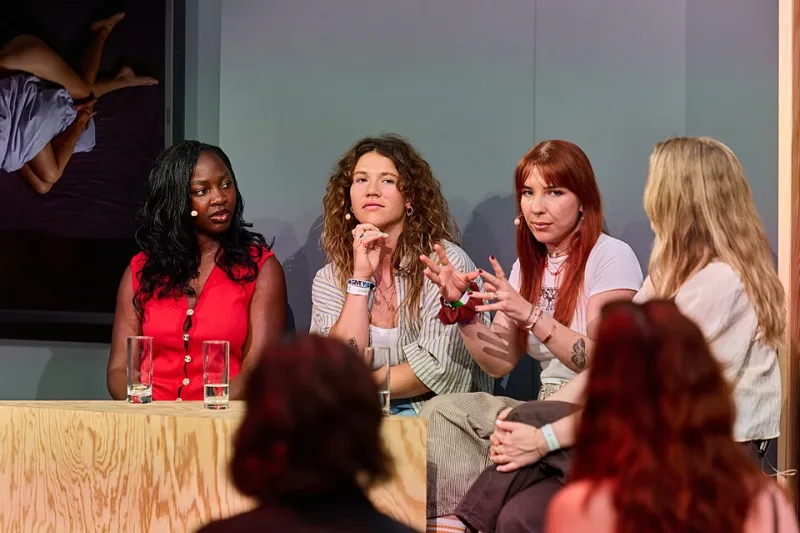
Photo: Leonhard Lenz, CC BY 4.0, via Wikimedia Commons
For a long time, the creative success story in America followed a pretty predictable arc. You grind. You grow. You get discovered. You blow up. And once you've blown up — millions of followers, brand partnerships, maybe a Netflix deal — you've made it. Done. Congratulations.
Gen Z didn't get that memo. Or maybe they got it, read it, and tossed it.
Across music, visual art, writing, film, and content creation, a significant wave of younger creators in their late teens and twenties are actively rejecting the traditional markers of success in favor of something harder to quantify but, by their own accounts, a lot more satisfying. They're building small. They're building weird. And they're doing it on purpose.
The Metric That Doesn't Measure Anything
Follower counts used to feel like the scoreboard. More followers meant more influence, more opportunity, more proof that your work mattered. But ask a lot of Gen Z creators about follower count and you'll get a shrug — or a mild eye roll.
"I have like 4,000 followers on Instagram and I genuinely don't care," says Maya, a 23-year-old illustrator based in Portland, Oregon, who sells limited-run zines and prints through her own website. "The people who buy my work actually want my work. They're not just scrolling past it. That feels worth more than any number."
This isn't just anecdotal. Platforms like Substack, Bandcamp, Patreon, and even Etsy have seen significant upticks in younger creators choosing direct-to-audience models over the algorithmic grind of Instagram or TikTok. These platforms let creators build revenue and relationship on their own terms — smaller, slower, but with a lot less noise.
Niche Is the New Mainstream
One of the most interesting things happening in Gen Z creative culture right now is the full rehabilitation of niche. Where earlier generations of creators often felt pressure to sand down their edges and broaden their appeal, younger creators are doing the opposite — going deeper, getting weirder, and finding that their most specific, personal work resonates hardest.
Take the underground zine scene that's been quietly exploding in cities like Chicago, Austin, and Brooklyn. These aren't polished media products. They're hand-stapled, intentionally lo-fi, sometimes deliberately difficult. They have print runs of 200. They sell out in an afternoon at a local record store. And the creators behind them are not trying to scale.
Or look at the wave of indie musicians releasing music exclusively on Bandcamp, skipping Spotify entirely in protest of streaming economics, and building loyal listener bases through newsletters and local shows. Artists like Yaeji, Samsa, and a dozen other names you might not know yet are operating on this model — and they're doing it not because they failed at the mainstream but because they chose something else.
"Going viral is a one-time event," one Brooklyn-based musician put it bluntly in a recent interview. "Building a community is a practice. I'm interested in the practice."
Rewriting the Rules of 'Making It'
So what does success actually look like for this generation of creators? Based on the conversations we've been having, a few themes keep coming up.
Creative evolution over creative consistency. Where older influencer culture rewarded consistency — same aesthetic, same energy, same content pillars — Gen Z creators are more likely to value their own growth as artists, even when it confuses their audience. Changing direction isn't a brand crisis. It's proof that you're still alive creatively.
Community impact over reach. The question isn't "how many people saw this?" It's "did this do something for the people who needed it?" Whether that's a visual artist creating work specifically for their Asian American community, a queer filmmaker making shorts that speak directly to LGBTQ+ youth in small towns, or a poet whose work circulates in mental health spaces — the impact is local, intentional, and deeply felt.
Ownership over exposure. Gen Z watched millennials get burned by platforms that changed the rules midway through the game. They saw what happened when Facebook killed organic reach overnight, when Vine disappeared, when the algorithm decided a creator's work simply wouldn't be shown anymore. The response has been a real push toward owned channels — email lists, personal websites, direct sales — where no platform can pull the rug out.
The Cultural Shift Nobody's Fully Clocked Yet
What's happening here is bigger than a trend. It's a genuine renegotiation of the relationship between creativity and commerce, between audience and artist, between ambition and integrity.
For decades, American creative culture has been organized around the idea of breakout success — the moment when everything explodes and the whole country knows your name. Gen Z is questioning whether that moment is actually worth chasing. They've watched enough creators blow up, burn out, and disappear to be skeptical of the whole model.
What they're building instead is something more durable. Smaller stages, yes — but stages they own. Audiences that are smaller but more committed. Work that serves their actual values rather than an algorithm's preferences.
At Han Yan Universe, this is the creative energy we find most compelling — not because small is inherently better than big, but because intentional is better than accidental. The creators who know why they're doing what they're doing, who've thought carefully about what they're building and for whom, are the ones whose work tends to last.
What the Rest of Us Can Learn
Even if you're not a creator yourself, there's something worth sitting with here. The Gen Z rejection of traditional success metrics isn't just a creative philosophy — it's a broader cultural pushback against the idea that more is always better, that growth is always the goal, that visibility equals value.
In a media landscape that's louder and more crowded than ever, the quiet confidence of someone building something small and meaningful on their own terms is, genuinely, kind of radical.
Maybe making it doesn't mean blowing up. Maybe it means building something that's actually yours.