Slow Is the New Bold: The Creators Winning by Making You Wait
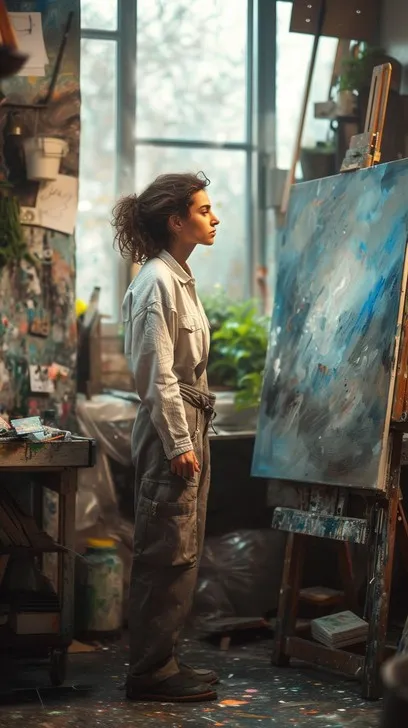
Photo: artist working slowly crafting in quiet studio contemplative creative process, via images.stockcake.com
Let me say something a little controversial: the content machine is tired. Not just the people running it — the machine itself. You can feel it in the scroll, in the way everything starts to blur together, in the moment you realize you've watched forty-seven videos and retained approximately nothing.
But here's what's interesting. While most creators are sprinting to keep up, a quieter group is doing the opposite. They're slowing down. Posting less. Taking longer. Making you wait. And somehow — somehow — it's working.
This isn't about burning out and going quiet. It's a deliberate creative choice. A statement. And increasingly, it looks like a competitive advantage.
The Attention Economy Has a Hangover
For the better part of a decade, the playbook was clear: post consistently, post often, stay relevant by staying present. The algorithm rewarded volume. Brands rewarded reach. And creators who couldn't keep up got left behind.
But audiences are different now. People who grew up watching YouTube in 2012 are in their late twenties. They've seen the burnout cycles. They've watched creators they loved disappear into content factories, pumping out videos that feel hollow. They've also watched a handful of artists — Beyoncé dropping Renaissance after years of relative silence, Kendrick Lamar taking his time between albums only to land Mr. Morale & The Big Steppers with devastating precision — prove that restraint can hit harder than constant presence.
There's a growing hunger for work that feels considered. Crafted. Like someone actually took their time.
What Deliberate Slowness Actually Looks Like
This isn't one movement — it's showing up in a bunch of different creative spaces, each with its own flavor.
In music, artists like Lana Del Rey and Frank Ocean have built entire mythologies around their unpredictability and long silences between releases. Their absence creates anticipation in a way that monthly singles simply can't. When they do show up, it's an event. Compare that to the artist releasing a new track every two weeks to feed the algorithm — technically more present, but somehow less there.
In visual art and illustration, a new wave of creators on Instagram and Behance are posting far less frequently but with dramatically higher production value and intentionality. Each piece tells a full story. The comment sections feel different — more like galleries than feeds, with people actually engaging with the work rather than double-tapping and scrolling.
In writing, the Substack era has given essayists and journalists permission to take real time between pieces. Writers like Anne Helen Petersen have built massive followings by publishing deeply researched, genuinely long-form work on a schedule that prioritizes quality over cadence. Readers don't just tolerate the wait — they look forward to it. The newsletter hitting their inbox feels like a gift rather than background noise.
Is This Actually a Strategy, or Just a Vibe?
Fair question. Let's be honest: not everyone who posts less is being intentional about it. Sometimes people are just tired, or busy, or going through something. And that's valid too.
But there's a meaningful difference between going quiet out of necessity and choosing slowness as a creative philosophy. The creators doing this deliberately tend to share a few things in common.
They're transparent about their process. They let their audience into the fact that they're working on something, even if they can't show it yet. This keeps the relationship alive during the silence. It turns the wait into a shared experience.
They invest the extra time visibly. When they do release something, you can feel the difference. The production is tighter. The ideas are more developed. The emotional resonance is higher. Audiences aren't just told to be patient — they can see why it was worth it.
And they've made peace with the algorithm's disapproval. This is maybe the hardest part. Platforms penalize inactivity. Posting less means reaching fewer new people in the short term. Choosing slowness requires accepting that trade-off, which is genuinely countercultural in a world where growth metrics are basically a religion.
The Audience Side of the Equation
Here's something worth sitting with: audiences are changing too. There's real fatigue with the firehose. People are curating more aggressively, muting more, unfollowing more. The bar for what earns sustained attention is rising.
In that environment, a creator who consistently shows up with something that feels genuinely made — not dashed off, not optimized, not repurposed — stands out in a completely different way. They're not competing on volume. They're competing on meaning. And meaning is a lot harder to replicate at scale.
There's also something psychologically interesting happening with anticipation. When a creator you love takes their time, the release of new work carries emotional weight that instant-access content rarely does. It taps into something old — the way people used to wait for a new album, or the next issue of a magazine they loved. That waiting created investment. It made the arrival feel like an occasion.
The Risk Nobody's Talking About
Okay, real talk: this approach isn't for everyone, and it's not without risk.
Slowing down when you don't yet have a built-in audience is genuinely hard. The "post less, go deeper" strategy tends to work best for creators who've already established trust and loyalty. If you're just starting out, consistency still matters — people need to know you exist before they can miss you.
There's also the question of financial reality. Many creators depend on platform revenue, brand deals, and algorithm-driven discovery to pay their bills. Going slow has economic consequences that aren't trivial. The deliberate slowness movement, as beautiful as it is, currently has the luxury of being practiced most visibly by creators who've already built sustainable income streams.
But even with those caveats, the underlying shift in values feels real and worth paying attention to.
What This Means for Creative Culture
Maybe what we're watching is a correction. The internet went fast — faster than anyone expected — and now some of the most interesting creative voices are pumping the brakes. Not because they can't keep up, but because they've decided keeping up isn't the point.
Craft takes time. Real ideas need room to breathe. And audiences, it turns out, can tell the difference.
At Han Yan Universe, we've always been drawn to the creative choices that don't follow the obvious path — the artists and makers who trust their instincts even when the platform metrics say otherwise. Choosing slowness in a fast world isn't passive. It's one of the boldest things a creator can do right now.
So maybe the question isn't how often you're posting. Maybe it's whether what you're making is actually worth the wait.