Built From Everything: The Artists Who Mix Every Tradition They've Ever Loved
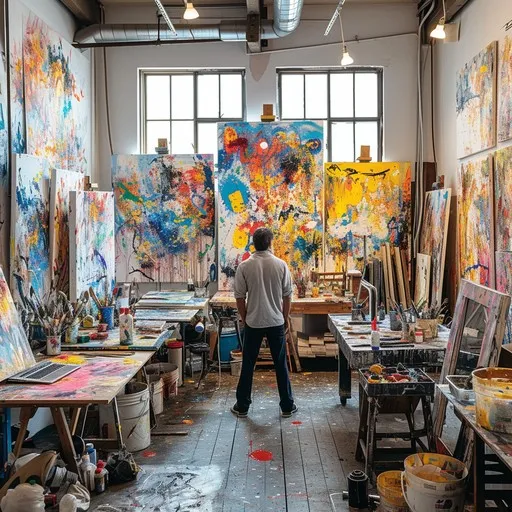
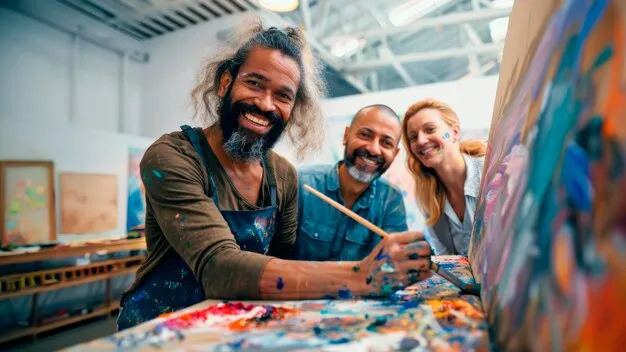
Photo: diverse artist studio mixing cultural art techniques collage creative workspace, via images.stockcake.com
There's a moment in a lot of creative careers where someone — a teacher, a mentor, an online comment section — tells you to pick a lane. Decide what you are. Commit. The idea being that clarity of identity equals clarity of audience, and clarity of audience equals a career.
But a growing number of creators are ignoring that advice entirely. Not out of rebellion, exactly. More like they genuinely can't picture themselves any other way.
They grew up with too many things in their ears, their eyes, their hands. They were raised on Sade and Soulja Boy. They went to Saturday Chinese school and then came home and drew anime fan art. They learned cumbia from a grandmother and then spent their teens locked in a bedroom producing lo-fi beats. And now they're making work that doesn't fit neatly into any single box — and finding out that's exactly what people are hungry for.
The Difference Between Remixing and Borrowing
Before we go further, it's worth naming the thing that makes some people uncomfortable: when does drawing from multiple traditions become something problematic?
It's a real question, and creators in this space think about it constantly. The short answer most of them give is credit and context. There's a meaningful difference between an artist who openly names their influences, centers their own lived connection to a tradition, and uses that tradition to say something — and an artist who lifts aesthetics for clout without understanding or caring about the culture they're pulling from.
The creators worth paying attention to are firmly in the first camp. They're not tourists in other people's cultures. They're people who grew up at the intersection of several of them at once, and who are using art to process that experience honestly.
Visual artist Maya Chén, based out of Los Angeles, describes her practice as "building a visual language I couldn't find anywhere else." Her work layers traditional ink wash techniques she learned from her Taiwanese grandmother with the graphic flatness of 1990s American comic books and the color theory of West African textile patterns she studied obsessively in college. The result is something that feels simultaneously ancient and completely now.
"People ask me which tradition I'm 'really' working in," she says. "And I want to say — all of them? I'm not sampling from the outside. These are all things I genuinely grew up with or went deep into. I'm not cosplaying any of it."
When the Mashup Is the Message
For some creators, the synthesis itself is the whole point. It's not just a stylistic choice — it's a statement about identity, about what it means to grow up in a pluralistic, internet-saturated America where you can fall down a rabbit hole about Malian griot traditions at 2am and wake up wanting to make something.
Producer and multi-instrumentalist Darius Okafor, who records under the name Rift Valley Sonics, makes music that pulls from Afrobeat, jazz fusion, and the kind of ambient electronic textures you'd hear on a Bon Iver record. He's Nigerian-American, grew up in Atlanta, and spent summers in Lagos. He's not trying to reconcile those influences — he's just letting them coexist.
"There's a version of my music where I try to make it make sense on paper," he says. "Like, here's the genre, here's the market. But the music that actually moves people is the stuff where I stop explaining and just make it."
His recent project, an EP that opens with a full kora solo and closes with a stuttering, glitchy beat that sounds like something off an early Flying Lotus release, has found an audience across multiple communities — none of whom seem confused about what it is, even if they can't categorize it.
The Internet Made This Possible (And Necessary)
It would be naive to talk about this movement without acknowledging what made it possible: the internet, and specifically the way it has collapsed the geography of cultural access.
A teenager in rural Ohio can now spend three years deep in K-pop production forums, then pivot to studying classic soul arrangements on YouTube, then get into Persian classical music through a TikTok algorithm rabbit hole. That kind of promiscuous, self-directed cultural education used to require geography or money or both. Now it just requires curiosity and time.
And the creators who came of age in that environment — who are now in their mid-twenties and early thirties and starting to hit their stride — are making work that reflects that reality. They're not confused. They're fluent in more languages than previous generations could realistically access.
The challenge, as illustrator and muralist Solange Vega puts it, is "doing the actual homework." She grew up in Miami to a Cuban-American family, got obsessed with Japanese woodblock printing as a teenager, and now creates large-scale public murals that blend both visual traditions with the bright, sun-bleached color palette of South Florida.
"I studied ukiyo-e seriously," she says. "I read about it, I looked at originals in museums, I talked to people who knew it better than me. It's not something I just grabbed because it looked cool. I think that's the difference. You can feel when someone did the work."
What This Means for Audiences
Here's the thing about this kind of art: it tends to create unusually loyal audiences. When a creator makes work that genuinely synthesizes multiple traditions with care and fluency, they often end up speaking to people who have been waiting for something that reflects their complexity too.
A second-generation Vietnamese-American kid who grew up on country music and hip-hop and is now obsessed with ambient electronic? There's a creator out there making something for exactly that person. And when that person finds it, they're not a casual fan. They're a found fan.
The remix generation isn't just changing what art sounds like or looks like. It's changing who gets to feel seen by it.
The Tradition of Having No Single Tradition
There's something almost paradoxical about the fact that this kind of creative synthesis — pulling from everywhere, crediting everything, building something that couldn't exist without all of it — is actually becoming a tradition in its own right.
The creators doing it best aren't rejecting lineage. They're expanding it. They're saying: the thing I come from is complicated, plural, and alive. And the work I make is going to reflect that — all of it, at once, unapologetically.
That's not a trend. That's a new kind of artistic identity taking shape. And if you've been waiting for work that finally sounds like all the things you love at the same time — it's already out there, being made right now.