Nothing Comes From Nowhere: The Art of Creating With Your Ancestors
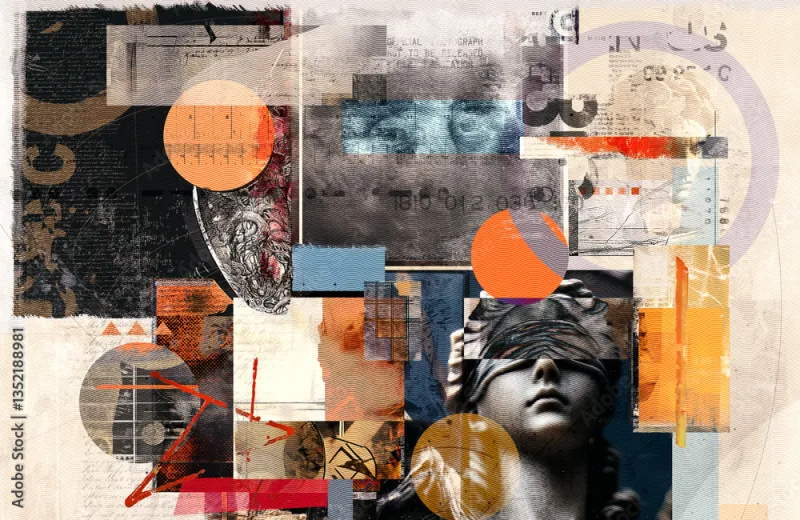
Photo: artist collage studio cultural artifacts mixing textures, via as2.ftcdn.net
There's a moment in every creative person's life when someone asks, "Where do you get your ideas?" And the honest answer — the one most artists think but rarely say out loud — is: from everything I've ever absorbed. Every song you've loved, every painting that stopped you cold, every story your grandmother told you at the kitchen table. None of it disappears. It just waits.
What's shifting right now, in a real and exciting way, is that a generation of creators has stopped pretending otherwise. They're not just influenced by what came before — they're in active, explicit conversation with it. Call it remixing, call it sampling, call it collage. Whatever the label, the philosophy is the same: originality isn't about starting from zero. It's about what you do with everything you've inherited.
The Myth of the Blank Page
Western culture has a long obsession with the solitary genius — the artist alone in a room, conjuring something from nothing. It's a romantic idea, and it's also largely fiction. Every creative tradition on earth has been built through borrowing, adapting, and reimagining what came before. Jazz musicians quoted each other constantly. Renaissance painters literally learned by copying masters. Oral storytelling traditions survive because each generation retells the same stories with new breath.
What's different now is the speed and the scale. A beatmaker in Atlanta can sample a 1970s Fela Kuti record, layer it under lyrics that reference both Langston Hughes and a TikTok meme, and drop the whole thing on SoundCloud by midnight. The cultural inheritance available to any creator with an internet connection is genuinely staggering — and the most interesting artists aren't overwhelmed by it. They're energized.
Sampling as Scholarship
Take the way producers in hip-hop have always treated the crate-digging process as something close to academic research. Finding the perfect sample isn't laziness — it's archaeology. You're locating a moment of feeling that was captured on tape decades ago and asking: what does this mean now? What happens when this sits next to something completely contemporary?
That same logic has migrated way beyond music. Visual artists like Mickalene Thomas have spent years incorporating art history's greatest hits — Manet, Matisse, classical portraiture — into work that centers Black women in ways those traditions never did. The reference isn't decoration. It's the argument. She's not just painting a beautiful portrait; she's rewriting who gets to be timeless.
In fashion, designers like Telfar Clemens and Pyer Moss's Kerby Jean-Raymond have done something similar, pulling from workwear history, Black American church culture, and sportswear simultaneously. The result doesn't feel like a costume or a pastiche. It feels like a complete world — because it is one, built from real and specific cultural memory.
The Difference Between Remixing and Copying
Here's where things get genuinely interesting — and a little complicated. There's a real distinction between creating in conversation with a tradition and simply lifting from it without understanding or credit. The creators who are doing this well tend to share a few things in common.
First, they actually know the source material. They've done the listening, the reading, the looking. They understand why a particular thing worked before they decide to use it. Second, they're usually transparent about the lineage. The best remixers wear their influences openly — they cite, they credit, they celebrate. And third — and this is the part that makes it art rather than just imitation — they bring a genuine point of view. They're not reproducing the original. They're responding to it.
Writer and cultural critic Hanif Abdurraqib talks about this beautifully when he discusses how he writes about music. He's not just reviewing albums — he's locating them inside a whole web of history, grief, joy, and context. The song means more because he knows what it's in conversation with. That's the remix mindset applied to criticism, to writing, to any creative act.
Your Inheritance Is Your Material
For creators coming from immigrant families, from diaspora communities, from cultures that mainstream America has historically ignored or misrepresented, the remix approach carries extra weight. It's not just an aesthetic choice — it's an act of reclamation.
Artists like Yaeji, the Korean-American DJ and producer, build music that sits in multiple worlds at once — Korean folk influences, New York underground club culture, indie pop, electronic experimentation. None of those elements cancel each other out. They amplify each other. The work feels specific and universal simultaneously, which is maybe the hardest thing to pull off in any creative medium.
That specificity is the whole point. The creators who are most exciting right now aren't trying to make something that appeals to everyone by being about nothing. They're making something rooted — in a place, a family, a set of traditions — and trusting that the roots are what make it resonate.
What Originality Actually Means
Maybe we need to retire the idea of originality as a kind of purity — the notion that the best art has no fingerprints on it but the maker's. That standard was always a little dishonest, and it's become actively unhelpful.
A more useful frame: originality is about the combination and the intention. What you choose to put in conversation with what else. What questions you're asking by making those choices. The creators building the most interesting work right now are the ones who treat their cultural inheritance — all of it, the high and the low, the mainstream and the marginal — as raw material for something that has never existed before.
Nothing comes from nowhere. But in the right hands, everything can become something new.