Love Letters to Culture: How Radical Transparency About Your Influences Becomes Your Signature
There's an old anxiety that haunts almost every creator at some point: What if people figure out where I got this from? The fear that your influences will expose you as a copycat, a borrower, someone without an original thought. But a growing wave of artists, musicians, filmmakers, and digital creators in the US are flipping that script entirely — and the results are some of the most exciting, layered work happening right now.
They're not hiding their references. They're building shrines to them.
The Myth of the Blank Slate
Here's the thing nobody tells you in art school or in the comments section: originality was never about starting from nothing. Every creative tradition — jazz, hip-hop, cinema, poetry, street fashion — is built on a foundation of people listening hard to what came before and then responding to it. The question was never whether you'd be influenced. It was always what you'd do with it.
But somewhere along the way, the culture developed this weird obsession with the solo genius. The creator who seemed to spring fully formed from the void, touching nothing, owing nothing. Social media made it worse. When you're building a personal brand, admitting your heroes can feel like admitting weakness. Like you haven't fully arrived yet.
Except the creators who are actually breaking through right now? A lot of them are doing the exact opposite. They're naming names. They're making the lineage visible. And in doing so, they're creating something nobody else can replicate — because nobody else has their specific set of obsessions.
When the Reference Is the Work
Think about how a producer like Kaytranada built a career by wearing his love for house, funk, and R&B not just openly but joyfully. Or how filmmakers like Ava DuVernay and Barry Jenkins have spoken extensively in interviews about the specific directors and cinematographers who shaped their visual language — and how that transparency doesn't diminish their work, it deepens it. Knowing what they were responding to makes the choices more meaningful, not less.
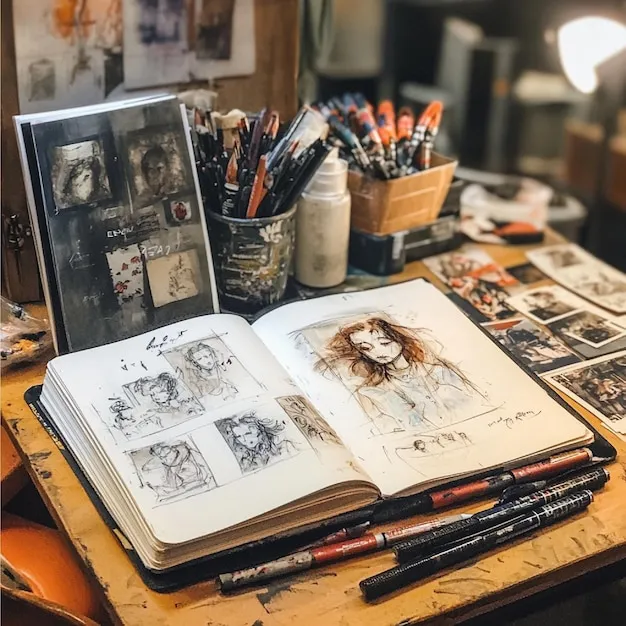
In the digital creator space, this is getting even more interesting. Some of the most engaging content on YouTube and Substacks right now are creators doing what you might call annotated creativity — making work that explains itself as it goes. A photographer who walks you through the exact Saul Leiter print they were thinking about when they set up a shot. A fiction writer whose newsletter breaks down which sentence in a Toni Morrison novel cracked open their whole approach to dialogue.
The reference isn't a footnote. It's part of the conversation.
The Line Between Tribute and Transformation
Okay, but let's be real — there's a difference between transparent influence and just... copying. So where's the line?
The creators navigating this best seem to share a few things in common. First, they're not just citing one source. When your work is a genuine collision of five or six deep obsessions, the output is almost mathematically impossible to reduce back to any single one of them. A creator who's equally obsessed with 1970s Afrobeat, Miyazaki's approach to background detail, and the structure of Southern Gothic novels is going to make something that sounds like none of those things individually — even if you can hear all of them.
Second, they're bringing themselves into the equation as the variable. Your references filtered through your specific biography, your specific community, your specific moment in time — that's the transformation. That's where the homage stops being tribute and starts being something new.
Third — and this is maybe the most underrated part — they're genuinely curious about the why behind their influences, not just the what. It's not enough to love a thing. The creators who turn influence into identity are the ones who've interrogated it. Why does this resonate? What is it doing technically? What does it make me want to say that I couldn't say before I encountered it?
Audiences Are Learning to Read the Layers
Something else is shifting, too, and it matters a lot: audiences are getting more sophisticated about this stuff. Especially younger audiences in the US who've grown up with YouTube rabbit holes, Genius annotations, and creators who routinely post their mood boards and playlists alongside their actual work.
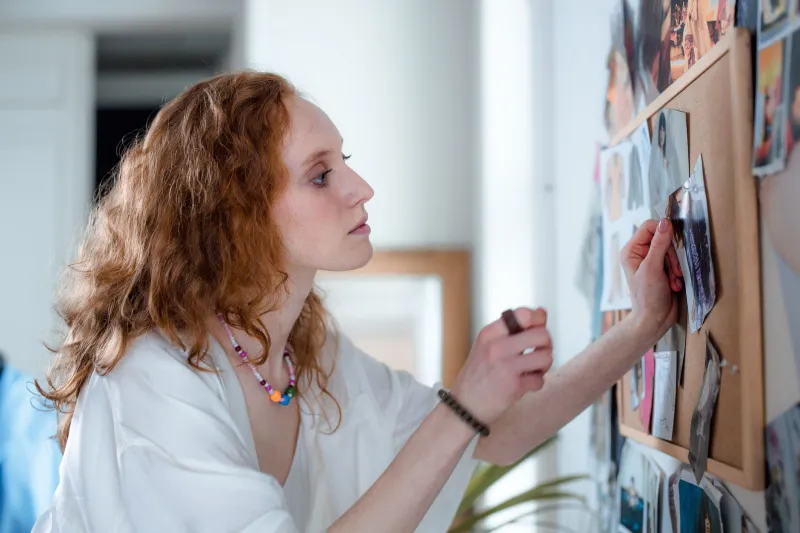
There's a whole generation of fans who don't just want the finished product — they want the director's commentary. They want to know what you were watching when you made this. They want to trace the lineage themselves, discover the references you're nodding to, and feel like they're part of an ongoing cultural conversation rather than just passive consumers.
This changes the relationship between creator and audience in a real way. When you're transparent about your influences, you're essentially inviting your audience into the research process. You're saying: here's the universe I'm working inside of — come explore it with me. That's a completely different proposition than presenting yourself as a finished, fully-formed thing.
And for a lot of creators, that invitation is what builds the most durable kind of loyalty.
The Remix as Autobiography
Maybe the most useful reframe is this: your influences, laid out honestly and completely, are actually a kind of autobiography. They tell people who you are, what you care about, where your mind goes when it's free to wander. Two creators can cite the exact same influence and make completely different work from it — because the influence passes through them, and they are not the same person.
That's why radical transparency about your references doesn't flatten your originality. It actually amplifies it. Because now the audience isn't just experiencing your work — they're experiencing your relationship to all the things that made you.
The creators figuring this out are building something more interesting than a personal brand. They're building a worldview with a paper trail. And in a moment when everything feels remixed, recycled, and algorithmically smoothed into sameness, that kind of intentional, annotated creativity stands out like a neon sign.
You don't have to pretend you came from nowhere. The somewhere you came from might be the most original thing about you.