Ship It Messy: How Sharing the Rough Draft Became the Most Honest Thing a Creator Can Do
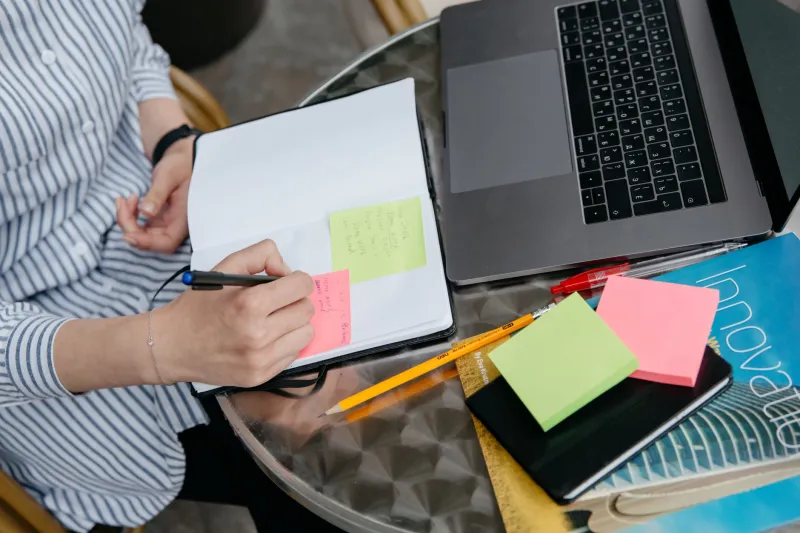
Somewhere in Brooklyn right now, a novelist is livestreaming herself writing the hardest chapter of her book. She's deleting sentences, sighing audibly, reading paragraphs out loud and then immediately shaking her head. She has 800 people watching. The chat is moving fast. Someone just wrote I feel like I'm in the room with you and someone else wrote this is better than any writing advice I've ever read.
She hasn't published a finished thing in two years. She has never been more visible.
The Finished Product Used to Be the Only Point
For most of creative history, the work that got shared was the work that was done. The gap between creation and presentation was private — sometimes brutally, necessarily private. Drafts got thrown away. Recordings got shelved. Sketches stayed in sketchbooks. What the audience received was the curated, polished, intentional version of the creator's vision, and the messy middle was protected like a trade secret.
This made sense in a world where distribution was scarce and gatekeepers were real. You got one shot at a first impression, so you made sure that impression was the best possible version of what you had. The rough draft wasn't just unready — it was a liability.
That logic hasn't disappeared entirely. But it's being seriously challenged by a generation of creators who have discovered something counterintuitive: for many audiences, the rough draft is more compelling than the finished work. Not because people have lower standards — but because they're hungry for something that polished content structurally cannot provide.
What the Mess Actually Gives You
When a creator shares their process in real time — the false starts, the uncertainty, the moments of genuine confusion — they're offering something that finished work almost never can: proof that the creative act is hard and human and worth watching even when it isn't working.
This matters more than it might seem. In a media environment where everything is optimized and filtered and color-graded and caption-perfected, the unfiltered creative moment stands out precisely because of its friction. It's not trying to be anything. It just is. And audiences who are themselves trying to make things — which is a lot of people, especially in the Gen Z and millennial demographics — find that honesty genuinely useful. Not just emotionally resonant, but practically instructive.
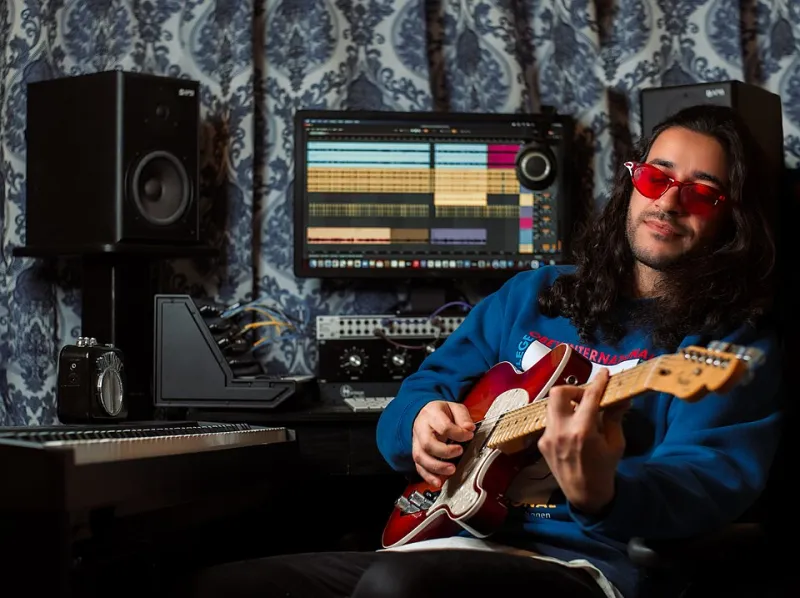
A musician livestreaming the process of writing a chord progression teaches her audience more about songwriting in forty minutes of stumbling than a ten-minute polished tutorial ever could. A graphic designer sharing his Figma file mid-project, with all the abandoned directions and wrong turns still visible, shows his audience something about creative decision-making that no finished case study can replicate. The mess is the curriculum.
The Economics of Incompletion
Here's where it gets interesting from a business standpoint. Sharing work-in-progress isn't just an aesthetic choice — it's become a viable monetization strategy, and in some cases, a more sustainable one than the traditional finished-product model.
Patreon and Substack have built significant portions of their creator ecosystems around this idea. Subscribers pay for early access, for behind-the-scenes content, for the feeling of being inside the process. What they're actually paying for is intimacy — the sense of being trusted with something unfinished, of being part of the story before it's resolved. That feeling of inclusion is incredibly sticky. It creates a kind of audience investment that passive consumption of finished work rarely generates.
Livestream platforms have taken this even further. On Twitch, on YouTube Live, on TikTok Live, creators are building audiences by simply doing their work in public — writing, recording, drawing, coding, composing — and letting the audience be present for it. The monetization comes through subscriptions, tips, and the kind of deep loyalty that comes from watching someone make something over time.
The irony is that some of these creators are making significantly more revenue from their unfinished process content than they ever made selling finished products. The process has become the product, and the product is doing just fine.
What This Does to 'Quality'
This is the question that makes a lot of traditional creative thinkers uncomfortable. If the rough draft is the content, if the livestreamed stumble is the point, what happens to craft? Does the rise of process-sharing mean that quality doesn't matter anymore?
The honest answer is: it depends on what you mean by quality. If quality means technical perfection — the cleanest edit, the most polished mix, the most refined visual execution — then yes, that kind of quality is being de-emphasized in process-sharing content. But if quality means does this create a genuine experience for the person receiving it, then process-sharing content can be extraordinarily high quality. It's just high quality in a different register.
What's actually happening is a redefinition. Urgency is becoming a quality marker. Transparency is becoming a quality marker. The willingness to be seen mid-thought, mid-mistake, mid-breakthrough — that's a form of creative courage that audiences are increasingly reading as a signal of authenticity. And in the current attention economy, authenticity functions a lot like quality used to.
Not Every Creator Should Go Unfinished
It's worth being honest about the limits here too. Process-sharing works best when the creator is genuinely interesting to watch in the act of making — when their thinking is visible, their personality comes through, their craft is developed enough that the stumbles are illuminating rather than just confusing. Not every creator's rough draft is compelling content. Some work needs the protection of the editing room.
The smart move isn't to abandon polish entirely. It's to be intentional about when and how you open the curtain. The creators who are doing this best aren't sharing everything unfiltered — they're curating their process with the same care they used to apply to their finished work. The difference is that the aesthetic of incompletion is deliberate. The mess is chosen.
The Deeper Shift
Underneath all of this is something bigger than a content strategy. The rise of process-sharing reflects a real cultural shift in what audiences want from creators — and maybe what creators want from themselves.
For a long time, the implicit contract was: you hide the struggle, I consume the success. That contract is being renegotiated in real time. More and more, the audience wants to be in the struggle with you. They want to feel the uncertainty, root for the breakthrough, witness the moment it clicks. They don't just want the song. They want to be there when the song becomes real.
That's not a lowering of standards. That's a different kind of intimacy. And right now, it might be the most alive thing happening in the creator space.