Yours, Mine, and Ours: How a New Generation of Creators Is Rewriting the Rules of Creative Ownership
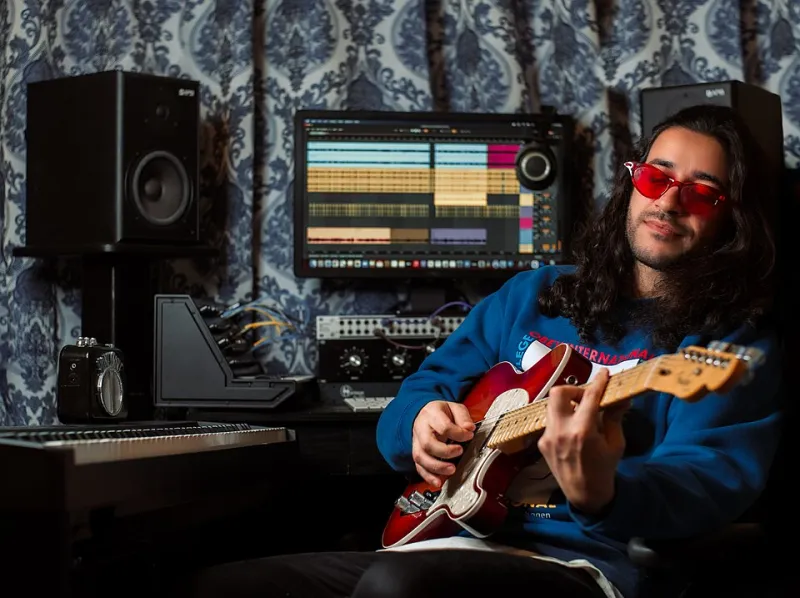
Photo: Matias Rengel, CC BY 2.0, via Wikimedia Commons
There's a moment every music producer knows. You're deep in a session, you flip a sample just right — chop it, pitch it, layer something new on top — and suddenly what was old becomes something nobody's ever heard before. The question that follows isn't creative. It's legal. Can I actually use this?
For centuries, artists have borrowed, stolen, quoted, and remixed their way to new ideas. That's not controversy — that's culture. But somewhere between the birth of copyright law and the rise of the internet, the act of building on existing work got complicated in ways that feel less like protection and more like gatekeeping.
Today, a new wave of creators is pushing back. Not by ignoring the rules, but by finding every possible crack in them — and sometimes by rewriting the conversation entirely.
The Sample Is Not the Sin
Ask any hip-hop producer about the golden era and they'll tell you: sampling was the art form. Those early records weren't just music — they were archives. Crate-digging wasn't a hobby, it was research. The sample was a citation, a tribute, a conversation across time.
Then came the lawsuits. The Biz Markie case in 1991 changed everything, essentially requiring clearance for any sampled material. Suddenly, the most democratizing tool in music history came with a price tag that only major labels could afford.
But here's the thing — creators adapted. They always do.
Interpolation became the workaround: re-record the melody, own the new recording, negotiate only with the publisher. Royalty-free sample packs exploded into a billion-dollar industry. And platforms like Splice turned licensing into a subscription model, making it possible for a teenager in a bedroom to build professionally cleared tracks without a legal team on retainer.
"The sample isn't the problem," says one Brooklyn-based producer who releases music under the name Lune Collective. "The problem is a system that was designed to protect a specific kind of ownership that doesn't reflect how creativity actually works. Nobody makes something from nothing. Nobody."
Visual Art Is Having the Same Fight
It's not just music. Visual artists have been navigating similar terrain for decades, but the digital age cranked up the volume.
Richard Prince made headlines — and enemies — by screenshotting other people's Instagram posts, printing them large, and selling them as fine art for six figures. Courts largely sided with him. The internet did not. The conversation that followed wasn't just about one man's questionable choices — it was about what transformation actually means, and who gets to define it.
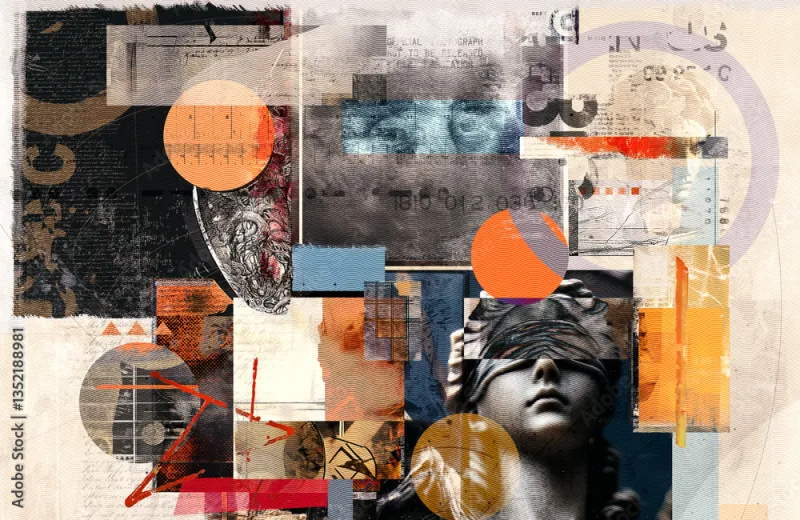
On the other end of the spectrum, you've got artists like Molly Soda or Arvida Byström, who openly incorporate internet ephemera, meme culture, and existing visual language into their work in ways that feel collaborative rather than extractive. The difference isn't always legal. It's relational.
"There's a version of this where you take and you don't give back," says a Chicago-based digital collage artist who goes by Prism Fault. "And there's a version where you're in conversation with the thing you're pulling from. Your audience can tell the difference. The original creators can definitely tell the difference."
Prism Fault makes a point of crediting sources publicly — not because she's legally required to, but because she sees it as part of the work itself. Her Instagram captions read like liner notes. Her audience loves it. "People want to know the lineage," she says. "It makes the art richer."
When the Algorithm Becomes a Co-Creator
Then there's the newest wrinkle: AI-generated content trained on existing human work without explicit consent. This one's still live in the courts, still raw in the culture, and creators are split.
Some see AI tools as the ultimate sample pack — infinitely flexible, immediately accessible, endlessly generative. Others see them as something closer to theft at scale: a system that consumed millions of artists' work and now competes directly with them.
What's interesting is that the most thoughtful creators aren't landing at either extreme. They're asking the same question they've always asked about sampling: What's the relationship between the source and the new thing? And is that relationship honest?
"I use AI as a texture tool," says a Los Angeles-based multimedia artist who asked to be identified only as Vessel. "I'm not asking it to make my work for me. I'm using it the way I'd use a distortion pedal — it's part of the sound, but I'm still the one deciding what the song means."
Vessel is quick to acknowledge the ethical murkiness. "I don't have a clean answer. I don't think anyone does yet. But I'd rather be in the conversation than pretend the tools don't exist."
Ownership Is Becoming a Community Question
Maybe the most interesting shift isn't happening in courts or copyright offices. It's happening in the comments section.
Creators who are transparent about their influences — who post "made this with that" breakdowns, who tag the producers whose loops they flipped, who give flowers publicly to the artists who shaped them — are building something that feels different from traditional ownership. They're building lineage.
And audiences are rewarding it. There's a growing appetite, especially among younger listeners and viewers, for art that knows where it came from. The remix isn't something to hide. It's something to brag about.
Some creators are even formalizing this through creative commons licensing, open-source sample libraries, and collaborative projects that explicitly invite others to build on their work. The logic is almost counterintuitive by old industry standards: give it away, and you get more back.
"I put out a free sample pack last year with stuff I made from old field recordings," says Lune Collective. "People have flipped it into things I never would have imagined. Now those producers tag me. Their audiences find me. It's not charity — it's strategy. And it's also just the right thing to do."
The Law Will Catch Up. Eventually.
Copyright law in the US was last significantly updated in 1998 with the Digital Millennium Copyright Act — which means the legal framework governing all of this predates TikTok, Spotify, AI image generators, and basically the entire modern creator economy.
Legislators are aware. Lawsuits are piling up. The outcome is genuinely uncertain.
But creators aren't waiting. They're building ethics ahead of legislation, community standards ahead of legal precedent, and new ownership models that the law hasn't caught up to yet.
That's actually pretty normal. Culture has always moved faster than the rules designed to contain it. The artists who matter tend to be the ones working right at that edge — not recklessly, but deliberately. Knowing exactly what they're doing and why.
The remix isn't a shortcut. For the creators doing it right, it's the whole point.