Still Wet: The Creators Who Never Let Their Work Dry
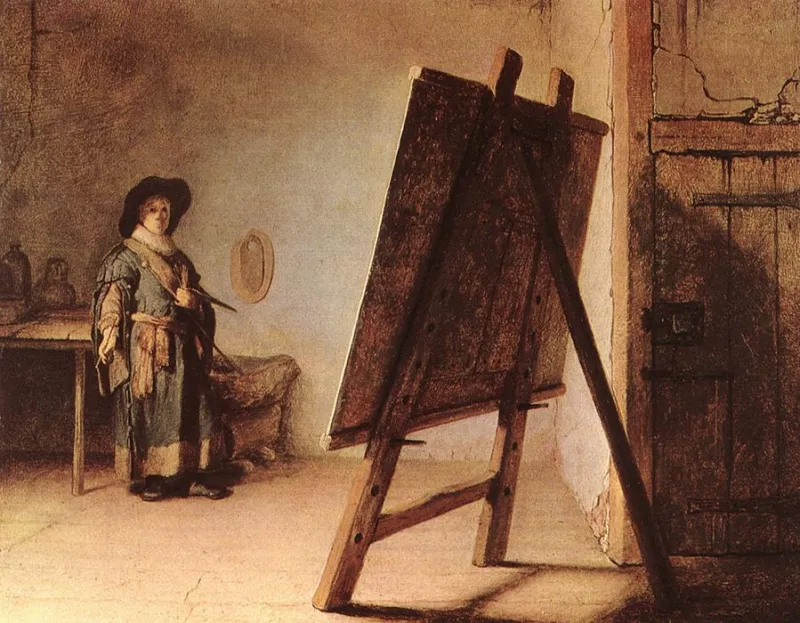
Photo: Rembrandt, Public domain, via Wikimedia Commons
There's a moment most artists know — the one where you step back, put down the brush or close the file, and say okay, that's it. Done. Finished. Ship it.
But a quietly rebellious group of creators is skipping that moment entirely. Not because they're perfectionists paralyzed by self-doubt, but because they've made a deliberate, almost philosophical choice: the work doesn't end. It just pauses.
This isn't procrastination dressed up in artsy language. It's a whole different relationship with creative output — one that treats a song, a painting, a novel, or a YouTube series less like a product to be delivered and more like a conversation that stays open.
The Album That Won't Stop Changing
Remember when Kanye West kept tweaking The Life of Pablo after it dropped — swapping lyrics, adjusting mixes, reshuffling tracks — and the internet kind of lost its mind? At the time, it felt like chaos. Looking back, it might have been a preview.
Today, indie musicians especially are leaning into the idea of the "living album." Some artists release a project, then quietly update it on streaming platforms months later — not because something was wrong, but because they changed. New influences, new relationships, new mornings that made an old lyric feel dishonest.
One lo-fi producer who goes by the name Cove Lark (based out of Portland, Oregon) told Han Yan Universe that she's released the same EP three times in two years — same title, same cover art, but different recordings each time. "People kept asking which version was real," she said, laughing. "They're all real. That's kind of the point."
For her, the iterative approach isn't about indecision. It's about refusing to let a younger version of herself have the final word.
Visual Art in Permanent Beta
In the gallery world, the idea of a finished painting is practically sacred. You sign it, you sell it, and that's the end of your relationship with it. The collector owns the object; you own the memory.
But some visual artists are finding ways around that contract — literally and conceptually.
New York-based mixed-media artist Dani Soo works almost exclusively in digital formats specifically because it lets her keep going. Her pieces live on her website and on her Patreon, where subscribers can watch earlier versions of the same image stacked like geologic layers. "I think of it like a sediment record," she explained. "You can see who I was being on any given Tuesday."
Others are doing something even more radical: building return clauses into sales agreements that allow them to borrow a piece back for exhibitions, or even to add to it. It's unusual, but it's happening — a quiet renegotiation of what it means to transfer creative ownership.
The question this raises isn't just aesthetic. It's legal, commercial, and deeply personal. When does a piece of art stop belonging to the person who made it? Does it ever?
Writing as a Document You Keep Editing
Publishing has always had a certain finality to it. The book goes to print, the print goes to shelves, and whatever you wish you'd said differently just lives in your chest forever.
But digital publishing is blowing that up. Substack writers regularly go back and revise essays from years ago — sometimes adding a note at the top, sometimes just quietly fixing a take that aged badly. Some treat their entire archive as a single evolving text, a kind of intellectual autobiography that gets smarter as they do.
Essayist and culture writer Marcus Teal, who runs a newsletter out of Atlanta, describes his body of work as "one long argument with myself." He'll reference a piece he wrote in 2019, then link to a 2023 follow-up where he basically disagrees with his earlier self. "That's not embarrassing to me," he said. "That's the whole show."
For Marcus, the willingness to leave his thinking visible — including the wrong turns — is itself a creative act. It models something that most polished, finished work can't: the actual texture of a mind working through something over time.
What This Does to Legacy
Here's where things get philosophically thorny. The Western art world has long been obsessed with legacy — the idea that what you leave behind is what defines you. Museums are built on it. Auction houses depend on it. The canon is essentially a list of things that got declared finished and important.
But if your work is always in flux, what exactly are you leaving behind?
Some creators are completely unbothered by this question. They'd argue that a legacy built on fixed objects is just a different kind of illusion — that even a painting in a museum is slowly changing, chemically, whether we acknowledge it or not. Everything decays or transforms. They're just being honest about it.
Others are more conflicted. Cove Lark admitted that she sometimes worries she's making it impossible for anyone to reference her work definitively. "Like, which version do you cite?" she said. "I don't have a great answer for that yet."
That uncertainty might be the most honest thing about this whole movement. It's not a manifesto. It's more like a question being asked in real time, in public, through the work itself.
The Audience as Co-Author
One thing that keeps coming up when you talk to creators in this space is the role of the audience. When work stays open, fans become something more than passive receivers — they become part of the ongoing story.
Commenters who point out a continuity error in a web series, listeners who DM a musician saying a lyric hit differently after a breakup, readers who push back on an essay's logic — all of that feedback loops back into the work, sometimes visibly, sometimes in ways only the creator knows.
This is a significant shift from the traditional model, where the creator speaks and the audience listens. It's messier, harder to control, and occasionally exhausting. But for the creators doing it well, it also means the work stays alive in a way that finished things rarely do.
Still Wet, Still Going
There's something kind of beautiful and kind of terrifying about refusing to call something done. It means staying vulnerable longer. It means your older work can still surprise you — or embarrass you, or teach you something you weren't ready to learn when you first made it.
But it also means the work keeps earning its place in your life. It doesn't just sit there, frozen in whatever you were thinking on the day you shipped it. It grows with you, or at least stays in conversation with you.
In a culture that rewards constant output and quick consumption, that's actually a pretty radical position. Not every creator can sustain it — and not every piece of work deserves it. But for the ones who are doing it intentionally, the unfinished canvas isn't a failure. It's a feature.
The work isn't done. It's just waiting to see what happens next.