When Everything Collides: The New Creators Who Are Inventing Art Forms Nobody Had a Name For
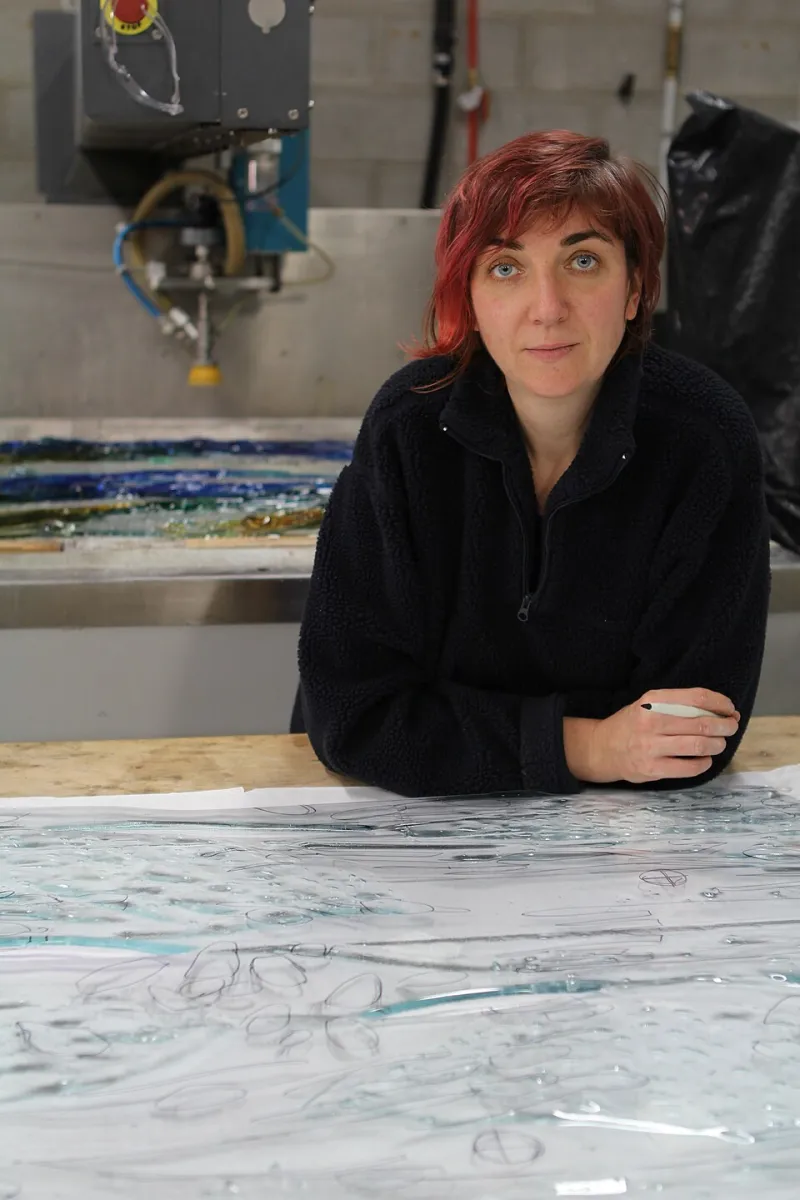
Photo: Victoria Balva, CC BY-SA 4.0, via Wikimedia Commons
There's a specific kind of excitement that happens when you encounter something creative and your brain genuinely can't file it away. Not because it's confusing — but because it's new. Like, actually new. No obvious reference point. No clean genre label. Just this feeling of: okay, I've never experienced anything quite like this before.
That feeling? It's becoming a lot more common. And it's not an accident.
A growing wave of creators — across music, visual art, fashion, digital media, and spaces that don't even have real names yet — are deliberately working at the intersection of traditions that have no business being in the same room together. They're not dabbling. They're not sampling for the aesthetic. They're building entirely new art forms by treating the whole history of human creativity like a parts bin.
Why "Genre" Feels Like a Cage Right Now
For a long time, genre was useful. It helped audiences find what they wanted. It helped labels, galleries, and publishers organize their rosters. It gave critics a framework. But somewhere along the way, genre went from being a helpful map to being a set of walls — and a lot of the most interesting creators alive right now are done living inside them.
Part of this is generational. The people making the most innovative work today grew up with the entire history of human art available on demand. A teenager in Ohio in 2012 could spend Monday deep in Afrobeat, Tuesday obsessing over Bauhaus graphic design, Wednesday down a rabbit hole of classical Persian poetry, and Thursday watching lo-fi anime music videos. All of that gets absorbed. All of it becomes part of how you see the world — and eventually, how you make things.
The result is a generation of creators who don't think in single traditions. They think in combinations.
The Philosophy Behind the Fusion
Here's the thing that separates genuine creative fusion from just throwing stuff at a wall: the best remixed art forms aren't random. They're deeply intentional.
When you dig into how these creators actually work, a few common philosophies start to emerge.
Emotional logic over aesthetic logic. The most compelling fusions aren't built around "wouldn't it be cool if" — they're built around a feeling the creator is trying to produce. The medium, the tradition, the aesthetic — those are all in service of an emotional target. If flamenco guitar and Detroit techno both create a certain kind of tension that feels right for what you're trying to say, then you use both. The question isn't "do these go together?" It's "do these get me where I need to go?"
Deep respect for everything they borrow. The creators doing this well aren't skimming surfaces. They're going in. They're studying the traditions they pull from with real seriousness — learning the rules before they break them, understanding the cultural weight of what they're touching. That depth is what keeps fusion from feeling like appropriation or gimmick. The audience can feel the difference between someone who really knows what they're working with and someone who just thought something looked cool.
Comfort with not having a pitch. One of the hardest parts of building a genuinely new art form is that you can't explain it in a sentence. You can't say "it's like X meets Y" because there's no X or Y that quite covers it. The creators thriving in this space have made peace with that. They've stopped trying to make their work legible to people who need a category, and started trusting that the right audience will find them through the work itself.
What This Actually Looks Like in Practice
Let's get concrete for a second, because this can sound abstract fast.
Think about the visual artists who are building worlds that blend traditional East Asian ink painting with 3D digital rendering and streetwear graphic design — creating images that feel ancient and hyper-current at the same time, that could exist as a museum piece or a hoodie drop or an animated short. No single art world has a clean place for that. But audiences? They lose their minds over it.
Or the musicians producing tracks that treat West African percussion, classical Indian raga structures, and Southern rap production as equal ingredients — not as a fusion concept album that announces itself as ambitious, but just as how they make music, naturally, because that's what their actual influences look like when you put them all in a room.
Or the digital storytellers building narrative experiences that are part video essay, part interactive fiction, part visual album, part community ritual — where the "content" isn't a single thing you watch or read but an ongoing world you participate in. The format didn't exist five years ago. Now it has a real audience.
In every case, the creator isn't trying to split the difference between traditions. They're trying to get to a place that none of the traditions could reach on their own.
The Audience Is Ready — Maybe More Than the Industry
Here's the interesting wrinkle: the people consuming this work are often way ahead of the institutions trying to categorize it.
The music industry still struggles to figure out what playlist a genuinely genre-fluid artist belongs on. Galleries still debate whether digital-native work counts as "real" fine art. Publishers still want to know what shelf a book goes on before they'll commit. But audiences? Audiences are just out here finding the work, loving it, sharing it, building communities around it — completely unbothered by the fact that it doesn't have a tidy label.
That gap between institutional confusion and audience enthusiasm is actually a massive opportunity for creators right now. The gatekeepers are slow. The algorithms, for all their flaws, are at least trying to surface what people actually engage with. And people are engaging with new.
The hunger for work that feels genuinely novel — not just novel-looking, but actually doing something that hasn't been done — is real and it's growing. Because we're all, at this point, a little tired of content that feels like content. We know what a trend looks like. We know what a format looks like. We're craving the thing that doesn't look like anything.
So What Does It Take?
Building a new art form — even a small one, even a personal one — takes a specific kind of courage. The courage to be uncategorizable for a while. To make work that confuses people before it clicks for them. To resist the pressure to simplify your vision into something pitchable.
It also takes genuine curiosity. Not the curated, aesthetic kind of curiosity that's really just trend-watching. Real curiosity — the kind that sends you deep into traditions you didn't grow up with, that makes you ask why something works before you try to use it, that keeps you learning long after you've gotten good.
The creators who are actually building new art forms right now aren't doing it because it's a strategy. They're doing it because they genuinely couldn't make the work any other way. The fusion isn't a concept. It's a necessity — the only honest expression of everything they've absorbed and everything they're trying to say.
And honestly? That's exactly why it hits the way it does.